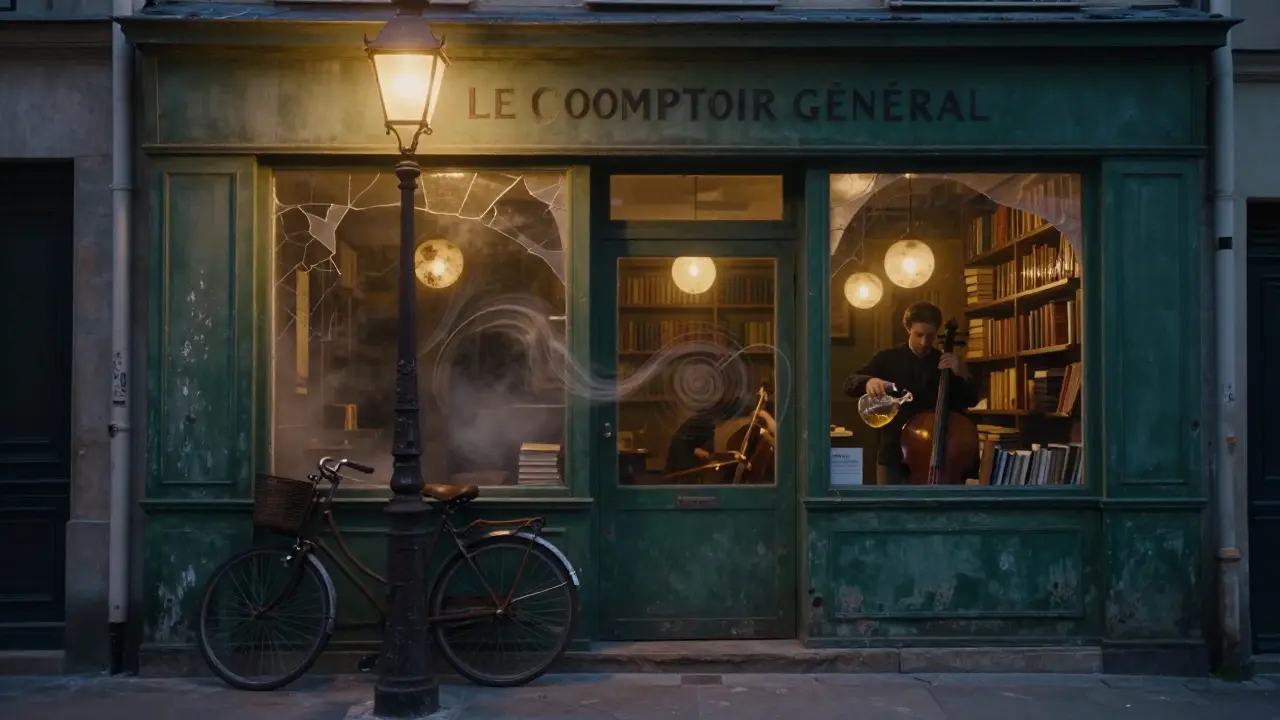
Paris isn’t just about croissants and the Eiffel Tower. After midnight, when the tourists vanish and the streetlights flicker low, the city reveals a different soul-one draped in velvet, candle wax, and whispered legends. This isn’t the Paris of postcards. This is the Paris of hidden chapels turned jazz dens, of crypts that double as cocktail lounges, and of doorways you’ll walk past a hundred times without noticing… until you know where to look.
Where the Shadows Have Names
Start at Le Comptoir Général in the 10th arrondissement. It doesn’t look like much from the outside-a faded green facade, a rusty bicycle leaning against the wall. But step inside, and you’re in a forgotten colonial attic crossed with a Victorian curiosity shop. Dusty globes hang from the ceiling. Books with no titles line the walls. The bartender pours absinthe from a crystal decanter, and the music? A slow, looping cello track that sounds like it was recorded in a cathedral during a thunderstorm. This place doesn’t advertise. It doesn’t need to. Locals know. The ones who’ve been coming since 2012, when the owner turned an old warehouse into a temple for the curious.
Just across the Seine, in the 5th, lies Le Bar à Vin-not a wine bar, despite the name. It’s a speakeasy hidden behind a bookshelf in a 17th-century apothecary. The door only opens if you whisper the name of a dead poet. No, seriously. Try it: "Baudelaire." The shelf clicks. The lights dim. You’re in. The walls are lined with old medical instruments. The cocktails are named after alchemical formulas. The "Lacrima Mortis" comes with a single black rose floating in liquid smoke. It’s not for everyone. But if you’ve ever wondered what it feels like to drink history, this is it.
The Churches That Never Slept
Paris has over 100 churches. Most are quiet. A few are still alive-at night.
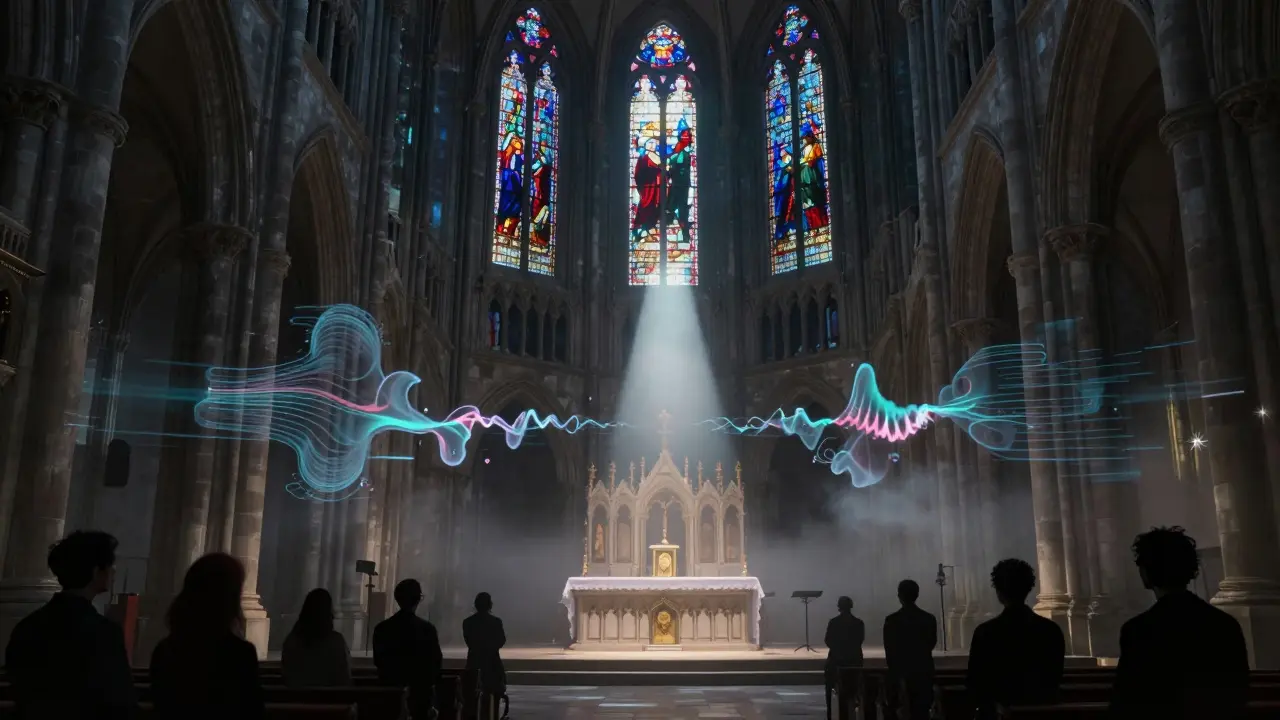
At Saint-Eustache, the grand Gothic church near Les Halles, midnight masses ended decades ago. But every Friday, the choir returns-not to sing hymns, but to perform dark ambient soundscapes. No robes. No candles. Just fog machines, bowed strings, and a single spotlight on the altar. The acoustics? Unmatched. The crowd? Mostly artists, goths, and historians with a taste for the eerie. You’ll hear echoes of medieval chants twisted into glitchy electronica. It’s not a concert. It’s a ritual.
Then there’s Saint-Médard in the 5th. The church itself is unremarkable. But in the courtyard, beneath a gnarled chestnut tree, lies a stone slab marked with a single word: "Ici repose..."-"Here lies..."-followed by nothing. No name. No dates. Just an empty tomb. Locals say it’s where the last witch of Paris was buried, alive, in 1720. On foggy nights, you’ll find people sitting on the bench beside it, sipping black tea, waiting to feel something. Something cold. Something watching.
The Clubs Beneath the City
Paris has tunnels. Not just the Métro. Real ones. Old sewer lines, forgotten bomb shelters, even a disused quarry beneath Montmartre.
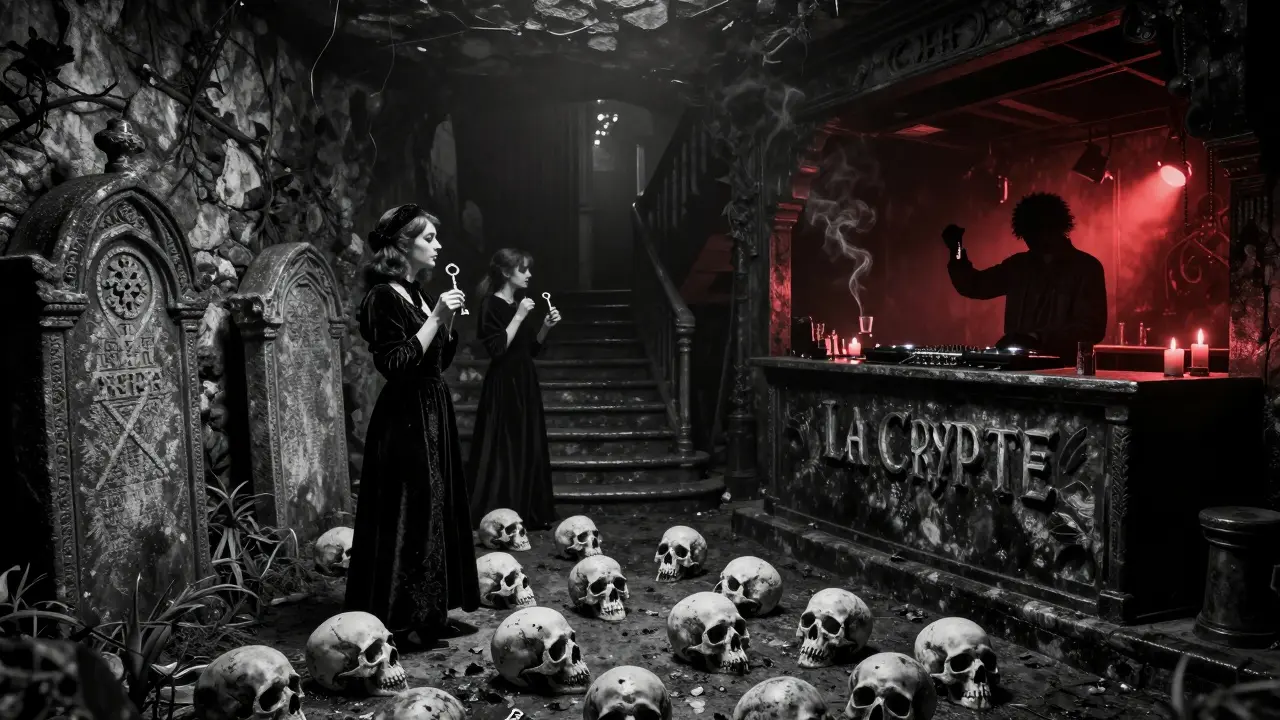
La Crypte sits below a 19th-century laundry building in Belleville. You enter through a trapdoor in the basement of a thrift store. The stairs are damp. The air smells like wet stone and incense. Down there, the walls are lined with medieval tombstones salvaged from demolished cemeteries. The DJ spins industrial techno mixed with Gregorian chants. The dance floor? A mosaic of human skulls pressed into concrete. No one flinches. You buy drinks with tokens made from old church keys. The bartender doesn’t speak. He just nods when you hand him one.
At Le Château Noir, hidden beneath a derelict mansion in the 14th, the floors are made of stained glass from a destroyed abbey. The ceiling is painted with a 17th-century fresco of angels falling into hell. The music? A mix of neofolk and post-punk. The crowd? Writers, poets, and people who wear black lace gloves even in summer. You won’t find this on Google Maps. You won’t find it on Instagram. You only hear about it from someone who was there last week-and won’t tell you how they got in.
The Vampires Aren’t Fiction
Yes, there are vampires in Paris. Not the ones from Twilight. Real ones.
They’re not immortal. They don’t sparkle. But they do drink blood. And they do gather.
Every third Saturday, a private dinner happens in a private room at La Maison du Sang, a restaurant in the 11th that looks like a 1920s funeral parlor. The menu? Duck confit with black garlic, venison with beetroot reduction, and a dessert called "The Last Breath"-a chocolate sphere that bursts with raspberry coulis and a single drop of beet juice. The wine list? All red. All from vineyards near the Ardennes. The guests? Mostly artists, biohackers, and people who believe blood is the oldest form of energy. No one talks about what they’re drinking. But if you ask the owner, he’ll just smile and say, "It’s organic. And it’s local."
There’s also the Club des Ombres, a members-only gathering in a basement beneath the Père Lachaise Cemetery. No music. No dancing. Just chairs in a circle. People sit. They speak. Sometimes they cry. Sometimes they bring a vial of their own blood and pour it into a silver chalice. No one drinks it. But they all touch it. It’s not about religion. It’s about connection. About feeling something real in a world that’s too bright, too loud, too fast.
How to Find These Places-Without Getting Lost
You won’t find these spots by Googling "gothic bars Paris." They don’t want you that way.
Here’s how to get in:
- Follow local gothic artists on Instagram-not the influencers, but the ones with 300 followers and 1000 likes on a photo of a cracked cathedral window.
- Visit the bookshop Librairie du Passage in the 6th. Ask for "the dark poetry section." The owner will hand you a folded note with a time and address.
- Go to the flea market at Saint-Ouen on a Sunday. Look for people in long coats, holding antique keys. Talk to them. Don’t ask what they do. Just say, "I’ve been looking for the quiet places."
- Don’t bring your phone. Or if you do, turn off location services. These places vanish if they’re too visible.
And never, ever take photos inside. Not just because it’s rude. Because some of these spaces don’t like being remembered. They like being felt.
What to Wear, What to Bring
There’s no dress code. But there’s a code.
Wear black. Not the kind you buy at Zara. The kind that’s been worn, washed, patched, and loved. Velvet, leather, lace-anything that feels like it’s been through something. Boots are better than heels. A scarf is better than a coat. You’ll need warmth. These places are cold. Always cold.
Bring cash. Always. No cards. No apps. Some places only accept old coins. Others take handwritten notes. One bar in Montmartre takes pressed flowers.
Don’t bring a date unless you’re sure they’ll understand silence. These places aren’t for talking. They’re for listening.
Why This Matters
Paris is changing. The old cafés are turning into co-working spaces. The bookshops are closing. The underground is being gentrified.
But the dark corners? They’re holding on.
These spaces aren’t just bars or clubs. They’re sanctuaries for people who don’t fit in the daylight. For poets who write in ink that fades. For musicians who play instruments made from bones. For lovers who believe love is better when it’s quiet.
Going to these places isn’t about being edgy. It’s about remembering that cities have souls-and some of them only speak after midnight.
Are these Gothic nightlife spots safe for tourists?
Yes, if you respect the space. These aren’t dangerous places-they’re intimate ones. Locals know who you are the moment you walk in. If you’re quiet, curious, and don’t take photos, you’ll be fine. But don’t treat them like theme parks. These aren’t Halloween parties. They’re living rituals.
Can I visit these places during the day?
Most of them are closed during daylight. The ones that aren’t-like Le Comptoir Général or Saint-Eustache’s sound events-are designed for quiet reflection, not sightseeing. If you show up at noon asking for "the vampire bar," you’ll be turned away. These places need darkness to breathe.
Do I need to be goth to enjoy this scene?
No. You just need to be open. Many visitors are artists, writers, or travelers tired of the same old Paris. Some wear jeans and a hoodie. Others wear corsets. The common thread? Curiosity. Not costume. If you’re drawn to silence, history, or the smell of old paper and candle wax-you belong here.
Is there a dress code or entry fee?
No formal dress code. But dark, layered clothing works best. Entry is usually free, but you’ll need to buy a drink-prices range from €8 to €15. Some places only take cash, and a few ask for a small donation or a story in exchange for entry.
What’s the best time to go?
Between 11 p.m. and 2 a.m. Most places open around 10:30, but they don’t come alive until after midnight. Weekends are busiest. Weeknights are quieter-and often more meaningful. If you want to really feel it, go on a Tuesday.
If you’re ready to see Paris after dark, don’t just look for it. Listen for it. The city doesn’t shout. It whispers. And if you’re quiet enough, you’ll hear it calling.