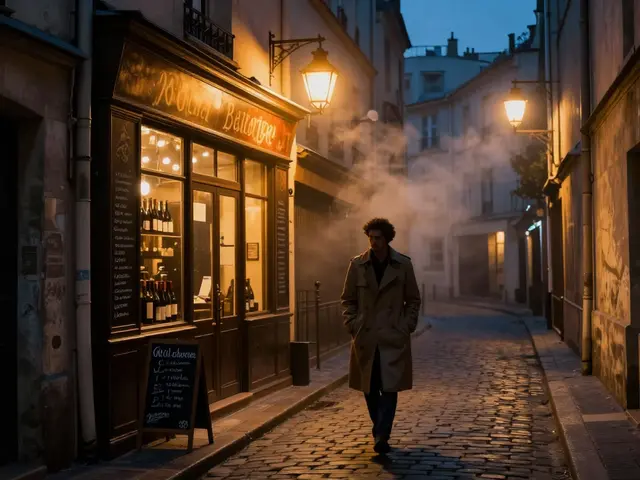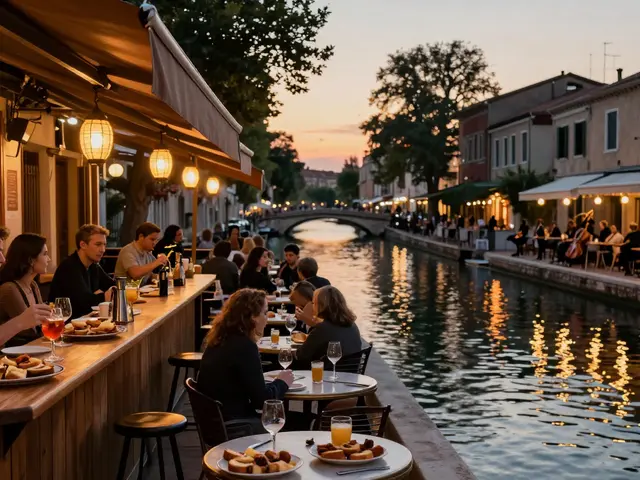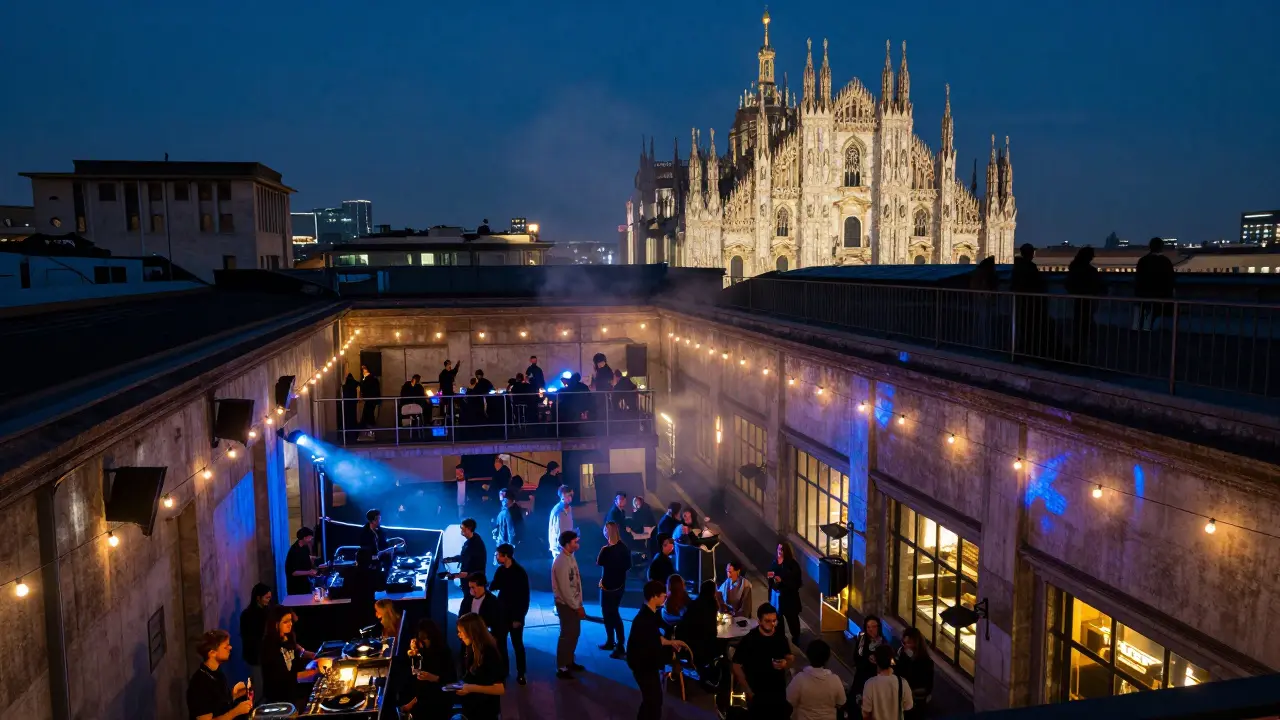
Milan doesn’t sleep. While the rest of Italy winds down after dinner, the city’s real energy kicks in after midnight. If you’re a night owl, Milan’s nightlife isn’t just a scene-it’s a rhythm. You don’t go out to drink. You go out to move, to hear bass through concrete walls, to find a hidden terrace with city lights stretching like a galaxy below, or to dance until the sun bleeds into the sky over the Duomo.
Where the locals go after midnight
Most tourists stick to the Navigli district, but the real insiders know the best spots are scattered across zones you won’t find on postcards. Start in Brera, where the bars are intimate, the cocktails are crafted like art, and the crowd is quiet until 1 a.m. Then head east to Porta Venezia, where the energy shifts. Here, you’ll find underground clubs with DJs spinning deep house and techno, packed with students, artists, and expats who’ve lived here long enough to know where the real beats live.One spot that always fills up by 1 a.m. is Magazzini Generali. It’s not a club, not a bar-it’s a converted warehouse with three floors, each with its own vibe. The ground floor is for drinks and DJs spinning vinyl. The second floor? That’s where the techno heads go. The third? A rooftop with views of the city skyline and a bar that only opens after 2 a.m. No cover charge until 1 a.m., and the drinks stay under €10 until 3 a.m.
Top clubs that make Milan famous
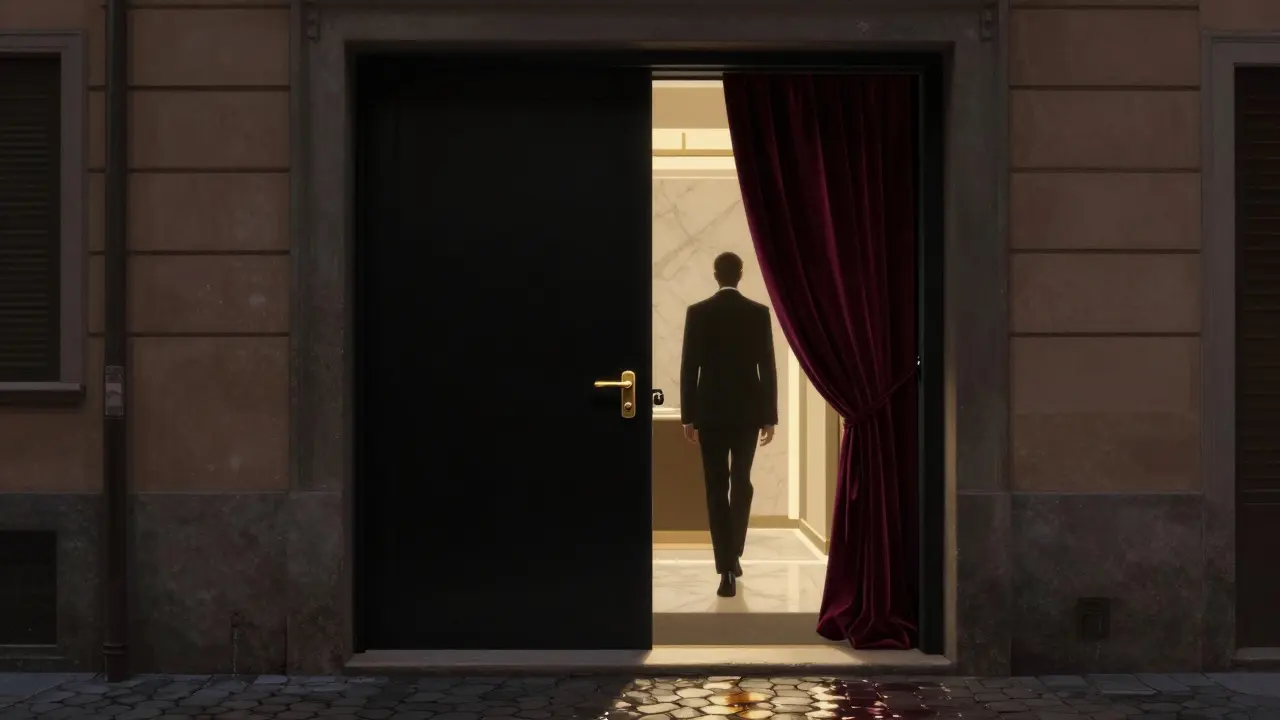
If you want to dance till sunrise, you need to know the names that matter. La Scala isn’t the opera house-it’s a club in the Porta Romana area that’s been around since the 90s and still draws international DJs. It’s dark, loud, and packed. The sound system? Custom-built by Italian engineers. The crowd? Mostly locals who’ve been coming since college. You won’t find tourists here unless they were invited.Armani/Privé is the luxury option. No line outside. No flashing lights. Just a sleek, minimalist entrance behind a plain door in the Brera district. Inside, it’s all velvet, marble, and low lighting. Drinks start at €25, but the crowd is models, designers, and people who own Milan’s fashion houses. You don’t come here to dance-you come to be seen. And if you’re lucky, you might spot a celebrity sipping champagne in the back booth.
For something wilder, head to Alcatraz in the San Siro area. It’s not glamorous. It’s gritty. The walls are painted black, the floor is sticky, and the bass shakes your ribs. This is where Milan’s underground electronic scene thrives. DJs here don’t play Top 40. They play experimental techno, industrial, and acid house. The crowd? Mostly 20s and 30s, dressed in black, no phones out. You’ll hear music you’ve never heard before-and forget you ever wanted to leave.
Bars that feel like secrets
Milan’s bar scene is all about hidden doors and unmarked entrances. Bar Basso in the city center is the birthplace of the Negroni Sbagliato. It’s tiny, no sign, and you’ll need to know it’s behind a curtain in a 1950s-style cocktail lounge. The bartender doesn’t smile. He nods. You order, and he makes it like he’s performing a ritual. It’s €14, but it’s the only place in the world where the drink tastes exactly right.Officine Umane is a bar that doubles as a gallery. It’s in a former factory near Lambrate. The walls are covered in street art, the tables are made from reclaimed wood, and the playlist is a mix of Italian indie rock and lo-fi beats. They serve craft beers from local microbreweries and small plates of cured meats and aged cheese. It’s open until 4 a.m. on weekends, and the vibe is more like a friend’s basement party than a bar.
For something quiet and warm, try La Cucina di Nonna-yes, it’s a bar, but it feels like your nonna’s kitchen. It’s tucked under a staircase in the Porta Ticinese area. No menu. You tell the owner what you’re in the mood for, and she brings you a glass of amaro and a small plate of olives or fried polenta. It’s open until 3 a.m., and the regulars are all over 50. They’ll tell you stories about Milan in the 80s. Listen.
Lounges with a view
If you want to sip something expensive and watch the city glow, head to a rooftop lounge. Terrazza Aperol on top of the Pirelli Tower is the classic. It’s not the cheapest-cocktails start at €18-but the view of the Duomo and the skyscrapers lit up at night is unforgettable. The music is smooth jazz, the seating is plush, and the crowd is mostly couples and business travelers who know how to enjoy a slow night.La Terrazza del Poldo is quieter, more local. It’s on the 14th floor of a residential building in the Navigli district. No elevator. You take the stairs. The bar is just a counter with a few stools, and the drinks are made with herbs from the owner’s balcony garden. It’s open only on weekends, and you need to book ahead. But if you get in, you’ll be one of maybe 30 people enjoying the skyline with a glass of prosecco and a view no Instagram filter can replicate.
What to expect: timing, dress, and rules
Milan’s nightlife doesn’t follow the rules of other cities. You won’t find 24-hour clubs. Most open at 11 p.m. and close by 3 a.m. or 4 a.m. The clubs don’t start feeling alive until 1 a.m. Show up at midnight, and you’ll be the only one there.Dress code? It’s strict in the upscale spots. No sneakers. No shorts. No baseball caps. Even in the underground clubs, people dress with intention. Black is safe. Leather, silk, tailored jackets-those work too. You don’t need to look rich. But you do need to look like you care.
And don’t expect free entry. Most clubs charge €10-€20 at the door. But here’s the trick: if you arrive before 1 a.m., you often get in free. After that, it’s cover charge. Some places let you book a table in advance-great if you’re with a group. But solo? Show up early, stand at the bar, and talk to the bartender. They’ll point you to the best spot.
Where to go after the clubs close
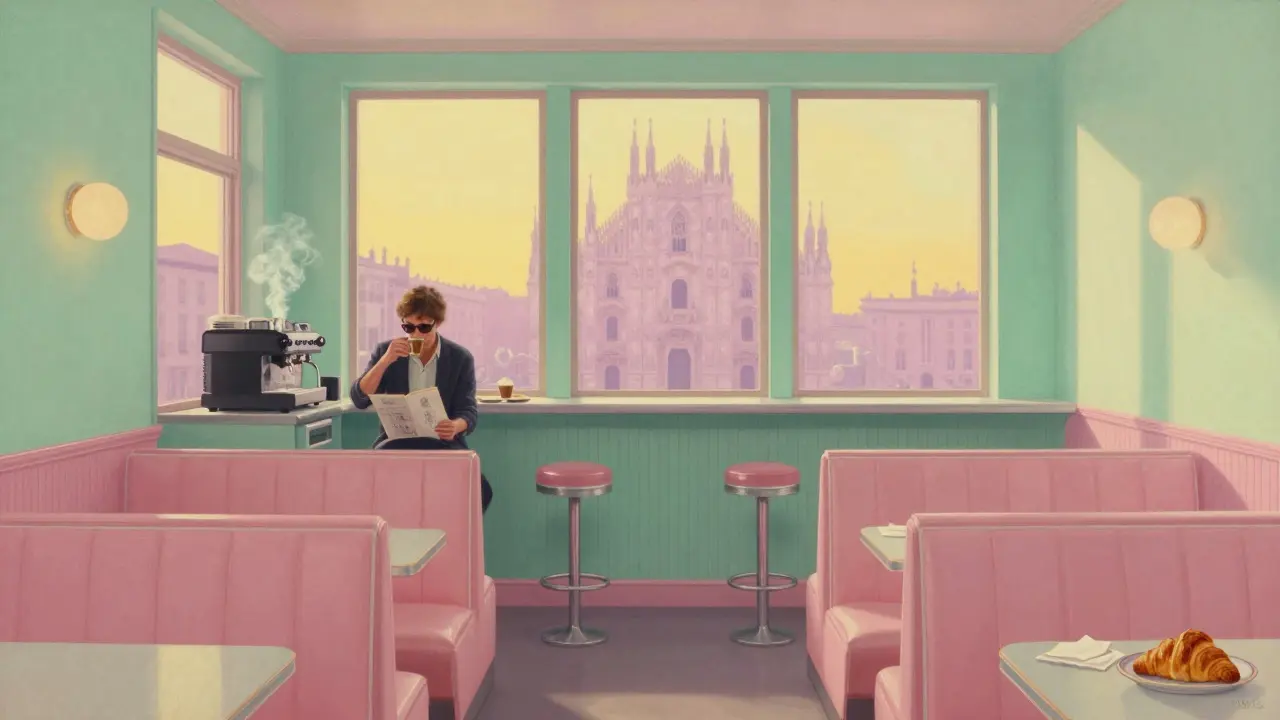
When the music stops, the night doesn’t end. Head to Bar Basso again if you’re still awake. Or try Bar Basso’s sister spot, Bar Luce, designed by Wes Anderson. It’s open 24 hours on weekends. Coffee, pastries, and a surreal 1950s interior that feels like stepping into a movie. You’ll find DJs who just finished their set sipping espresso, and artists sketching in notebooks. It’s the only place in Milan where the night never really ends.Or just walk. Milan’s streets are quiet after 4 a.m. The air is cool. The Duomo glows. You’ll pass a few night cleaners, a taxi driver, maybe someone walking their dog. And if you’re lucky, you’ll see the sunrise over the Brera district, the sky turning from black to lavender, and you’ll realize-this is why you came.
What time do clubs in Milan usually open and close?
Most clubs in Milan open around 11 p.m. and don’t really get going until 1 a.m. They typically close between 3 a.m. and 4 a.m., with a few staying open until 5 a.m. on weekends. Don’t show up before midnight-you’ll be the only one there.
Is there a dress code for Milan nightlife?
Yes, especially at upscale clubs and lounges. Sneakers, shorts, and baseball caps are often not allowed. Black clothing, tailored pieces, leather, or silk work well. Even in underground clubs, people dress with care. It’s not about being rich-it’s about showing you respect the scene.
How much do drinks cost in Milan clubs and bars?
Cocktails at upscale bars like Armani/Privé start at €25. At mid-range clubs and lounges, expect €12-€18. In underground spots like Alcatraz or Officine Umane, you can find drinks for €8-€12. Many bars offer happy hour deals between 8 p.m. and 11 p.m., and some have €10 drinks until 3 a.m.
Are there any free-entry nights in Milan?
Yes, but they’re rare. Most clubs charge €10-€20 at the door. The best way to get in free is to arrive before 1 a.m. Some venues, like Magazzini Generali, don’t charge until 1 a.m. Always check Instagram or local event pages like Milanello or Clubbing Milano for free-entry nights-usually on Wednesdays or early weekends.
What’s the best way to get around Milan at night?
The metro runs until 1:30 a.m. on weekends. After that, taxis are your best bet-download the FreeNow app for reliable rides. Uber doesn’t operate in Milan. Walking is safe in central areas like Brera, Navigli, and the city center, but avoid isolated streets after 3 a.m. Always carry your ID-some clubs check it at the door.